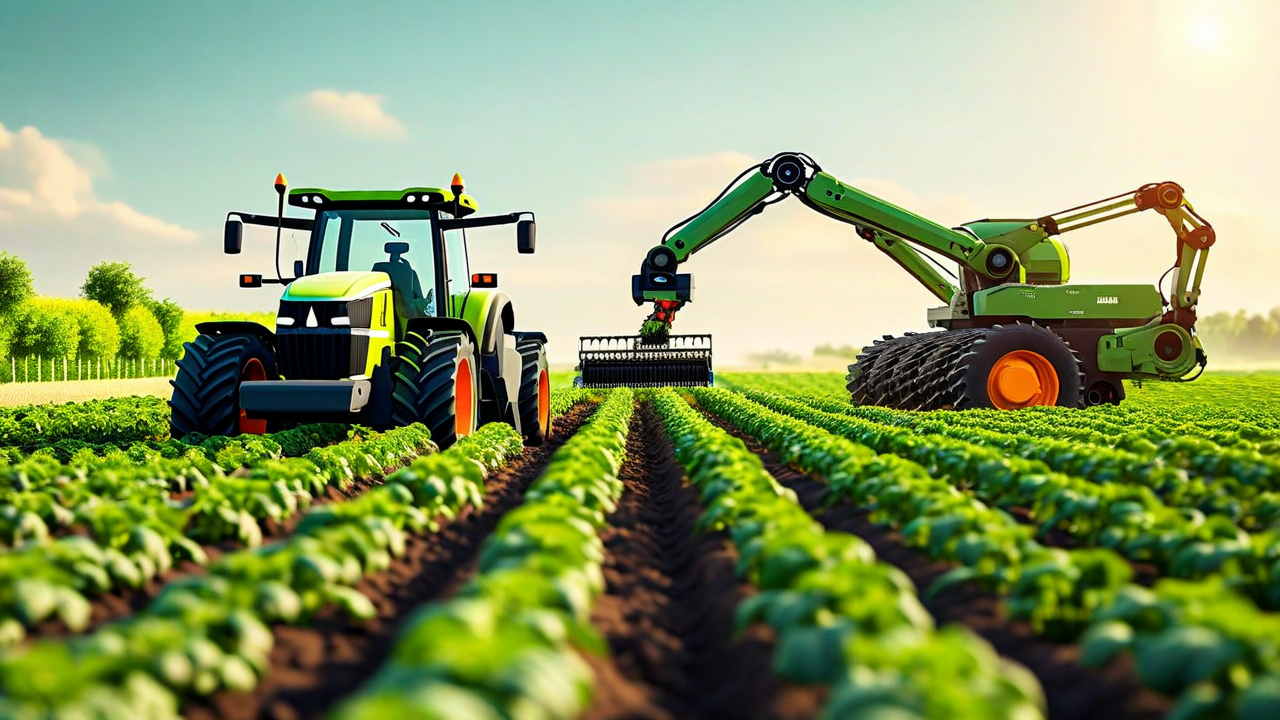
Agriculture is one of the oldest industries in human civilization and, paradoxically, one of the last major sectors to experience the full transformative impact of robotics and automation. The physical complexity and variability of outdoor agricultural environments, the seasonal and weather-dependent nature of agricultural work, the constrained economics of commodity farming, and the conservatism of a multi-generational industry with deep ties to traditional practices have all slowed the adoption of automated systems that have already transformed manufacturing and logistics.
But the conditions that have slowed adoption are shifting. Labor shortages in agricultural markets are acute and structural — not cyclical. Climate pressures are creating urgent demands for more precise, resource-efficient farming practices that manual methods cannot deliver. Technology costs have fallen to levels where agricultural robotics is approaching economic viability across a growing range of applications. And a new generation of farming operators is more open to technology adoption than their predecessors. At Gravis Robotics Capital, agricultural robotics is one of our most exciting investment categories.
The Labor Crisis in Agriculture
The labor challenge in agriculture is, in many markets, at crisis level. Specialty crop farming — the production of fruits, vegetables, nuts, and ornamental plants — is extraordinarily labor-intensive. Most specialty crops require hand harvesting because the fruit is delicate, irregularly distributed on the plant, and requires selective picking at peak ripeness. In the United States alone, specialty crops represent over $60 billion of annual production and require hundreds of thousands of seasonal farm workers who must be recruited, housed, transported, and managed.
The supply of seasonal farm labor has been declining for years. Demographic changes, evolving immigration patterns, competing employment opportunities in construction and services, and the physically demanding nature of agricultural work have all contributed to labor shortfalls that are well-documented and worsening. In many growing regions, farms are leaving crops unharvested because they cannot find sufficient labor — a situation that represents hundreds of millions of dollars of annual economic loss.
The economics of this labor crisis create a powerful pull for robotic harvesting systems. A robotic strawberry harvester that can identify ripe fruit, navigate between rows, and pick 80% of what a human picker can pick — even at significantly higher capital cost — can create compelling ROI in a market where human picking labor is either unavailable or prohibitively expensive. The economic threshold for agricultural robotics is not as demanding as it might appear when the alternative is unharvested crop.
The Precision Agriculture Foundation
One of the most important enablers of robotic agricultural applications is the widespread adoption of precision agriculture technology over the past decade. GPS-guided tractors, yield mapping systems, variable-rate application controllers, and drone-based scouting platforms have collectively transformed farming operations at the larger end of the market. In the process, they have built a culture of technology acceptance among farming operators who have already experienced the benefits of data-driven, automated systems.
More importantly for robotics, precision agriculture infrastructure has created data assets and connectivity that robotic systems can leverage. A farm operation that already tracks field boundaries, soil variability maps, historical yield data, and crop health imagery through aerial and satellite monitoring has the information infrastructure that robotic systems need to plan efficient routes, identify high-priority work areas, and integrate their activities with the broader farm management system.
The transition from precision agriculture tools — which assist human operators — to truly autonomous robotic systems is shorter and more achievable in operations that have already embraced the underlying data infrastructure than in those starting from scratch. Companies that are building robotic products with clean integration into existing precision agriculture platforms are seeing faster adoption cycles than those requiring wholesale replacement of existing farm management workflows.
Application Categories and Commercial Maturity
Agricultural robotics spans a wide range of applications at varying levels of commercial maturity. Drone-based crop scouting and precision application is the most commercially mature segment, with multiple companies offering commercial services and products for crop monitoring, plant health assessment, and precision application of inputs like fertilizer, pesticides, and water. The fixed-wing and multi-rotor drone platforms that serve this market have reached a level of reliability and regulatory acceptance that supports broad commercial deployment in most markets.
Autonomous ground vehicles for row crop farming — self-driving tractors and implements for plowing, planting, spraying, and cultivation in structured row crop environments — represent the next tier of maturity. The structured environment of row crops, with known row spacing and predictable navigation paths, makes autonomous operation more tractable than in specialty crops. Several manufacturers are offering commercially available autonomous or semi-autonomous tractor platforms, though the capability set and reliability in complex field conditions continue to evolve.
Robotic harvesting for specialty crops is the most technically challenging and commercially earliest-stage category, but also the one with the most urgent economic justification given the labor dynamics described above. Strawberry, tomato, cucumber, and apple harvesting robots have all been demonstrated at commercial scale by various companies, with performance levels that are approaching commercial viability for specific crop types and production systems. The next two to three years will likely see the first broadly commercial robotic harvesting deployments reach meaningful scale.
Technical Challenges Specific to Agriculture
Agricultural robotics presents a distinctive set of technical challenges that distinguish it from industrial and logistics robotics. The outdoor environment introduces variability in lighting, weather, terrain, and crop condition that controlled indoor environments do not have. A vision system that performs excellently in a warehouse under stable LED lighting must be robustly redesigned for a strawberry field where sun angle, cloud cover, and leaf shadow create constantly changing visual conditions.
The biological variability of agricultural objects — the enormous variation in shape, color, size, orientation, and visual appearance among even nominally identical fruit or vegetable items — is another fundamental challenge. Training computer vision systems to reliably detect and localize ripe fruit across this biological variability, at the speeds and under the lighting conditions of a commercial agricultural operation, requires large, carefully curated training datasets that are specific to each crop type and production system.
Mechanical robustness in agricultural environments is a third challenge that distinguishes agri-robotics from cleaner applications. Agricultural robots operate in dust, mud, water, humidity, and temperature extremes. They encounter obstacles that would not exist in a warehouse — irrigation lines, trellising wires, unexpected terrain features, and the physical resistance of densely growing plant matter. Components and systems that perform reliably in indoor conditions often require significant redesign to achieve adequate reliability and maintenance intervals in agricultural environments.
Key Takeaways
- Agricultural labor shortages are structural and worsening, creating powerful economic demand for robotic automation even at high capital costs.
- Precision agriculture technology has built data infrastructure and operator acceptance that accelerates robotic adoption in technologically advanced farming operations.
- Drone-based precision agriculture is commercially mature; autonomous ground vehicles are early commercial; specialty crop harvesting is approaching viability.
- The technical challenges of outdoor agricultural environments — variable lighting, biological variability, mechanical robustness — require purpose-designed solutions rather than adaptations of indoor robotic systems.
- The combination of labor crisis economics and technology maturity creates a compelling investment window for agricultural robotics in the current period.
Conclusion
Agricultural robotics is at the threshold of its commercial moment. The combination of structural labor shortages, advancing technology capabilities, and a generation of farming operators who have already embraced precision agriculture tools creates the conditions for rapid adoption of fully autonomous robotic systems over the next five to ten years. The companies that crack the technical challenges of outdoor autonomy in agricultural environments and build the customer relationships and operational expertise to deploy at scale will be building very valuable businesses. At Gravis Robotics Capital, this is a category we are watching and investing in with real conviction, funded by our $25M Seed Round. Reach out to us if you are working on agricultural automation.