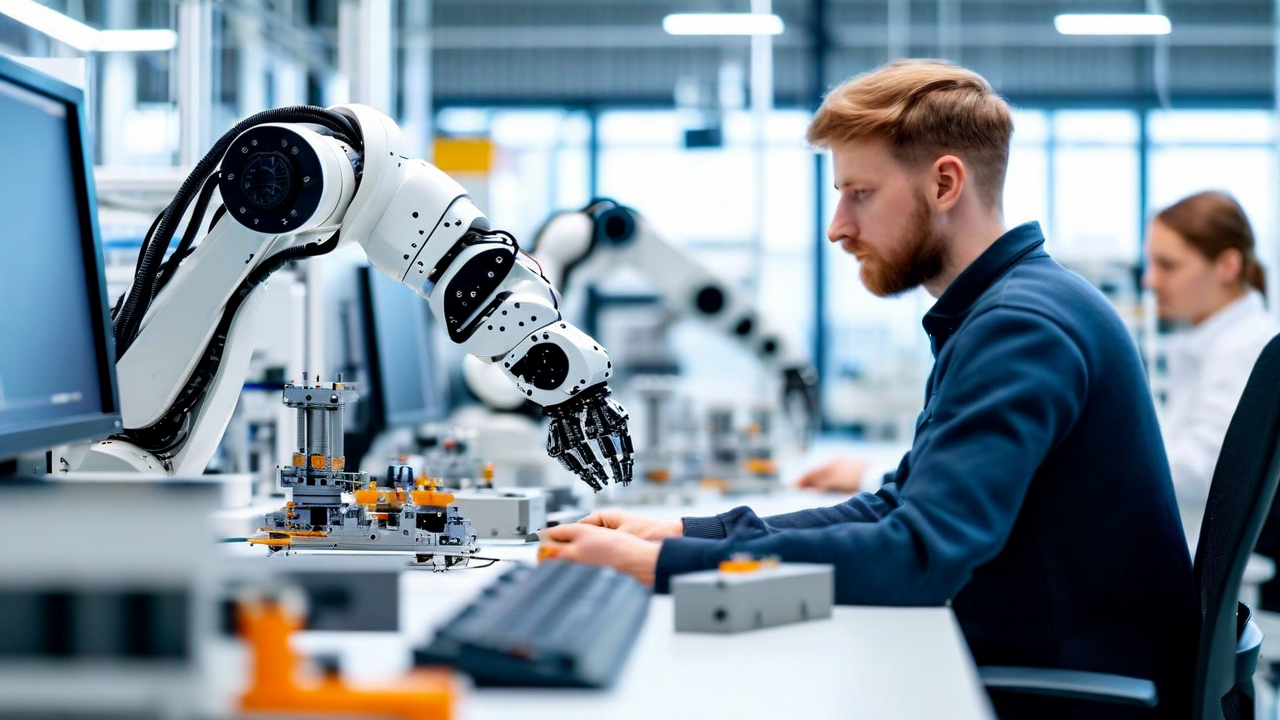
Technology cluster effects are among the most powerful forces in innovation economics. When a critical mass of talent, capital, institutions, and shared infrastructure concentrates in a geographic area around a particular technology domain, the resulting ecosystem creates compounding advantages that are extraordinarily difficult for other regions to replicate. Silicon Valley for software. Cambridge, England for life sciences. Detroit for automotive. And Boston — more specifically the Boston-Cambridge corridor — for robotics.
The dominance of the Boston-Cambridge area in robotics is not accidental. It has been built over decades through deliberate investment in research institutions, the organic development of a talent ecosystem, and the maturation of a robotics-specific venture capital and industrial partner network. At Gravis Robotics Capital, we spend significant time in Boston and view it as one of the most important places in the world for identifying and building the next generation of robotics companies.
The Research Foundation: Unmatched Depth and Breadth
The foundation of Boston's robotics ecosystem is its concentration of world-class research universities and institutes. MIT, Harvard, Boston University, Northeastern University, and Tufts University together represent an extraordinary concentration of faculty expertise, graduate student talent, and research infrastructure across every relevant discipline — mechanical and electrical engineering, computer science, materials science, biomedical engineering, and cognitive science.
MIT's Computer Science and Artificial Intelligence Laboratory (CSAIL) is perhaps the single most important robotics research institution in the world. The faculty roster reads like a who's who of foundational robotics research: pioneers in manipulation, locomotion, machine learning for robotics, human-robot interaction, and autonomous systems. The laboratory has spun out dozens of companies that have collectively attracted billions in venture capital and created meaningful commercial impact across industrial, logistics, and consumer robotics sectors.
Harvard's Wyss Institute for Biologically Inspired Engineering has built a distinct but complementary research identity around soft robotics, microrobotics, and biomedical devices. The Wyss Institute's translation focus — an explicit mandate to move research from laboratory to clinical and commercial application — makes it unusually effective at generating commercially viable innovations rather than research papers that gather citations but never leave the laboratory.
Northeastern University has built one of the strongest robotics-specific graduate programs in the country, with a co-op model that produces graduates with substantial industry experience alongside their academic training. The university's Institute for Experiential Robotics provides both a research platform and a talent pipeline that feeds directly into Boston's commercial robotics ecosystem.
The Talent Ecosystem: Self-Reinforcing and Deepening
The most important output of Boston's research institutions is not intellectual property or publications — it is people. The Boston-Cambridge corridor produces more qualified robotics engineers, computer scientists, and hardware developers than any comparable geographic area in the world. And because commercial robotics companies have established strong presences in the region, these graduates have compelling career options that allow many of them to remain in Boston rather than migrating to other technology centers.
The self-reinforcing nature of this dynamic is worth emphasizing. Top researchers choose Boston's universities in part because the commercial ecosystem provides interesting problems and career options. Commercial companies locate in Boston in part to access the talent pipeline from these universities. The concentration of both creates a networking and knowledge-sharing environment that accelerates innovation on both sides.
The professional networks that develop in this environment are an underappreciated asset. The robotics engineers and researchers who have spent time at Boston's leading research labs and commercial companies form connections across institution boundaries that accelerate technology transfer, enable collaborative projects, and create the trusted professional relationships that make it easier for founders to recruit technical co-founders and early employees.
The Commercial Ecosystem: From Startups to Anchors
Boston's robotics commercial ecosystem spans the full range from early-stage startups to major global companies with deep regional roots. The presence of these anchor companies creates a commercial infrastructure — contract manufacturers, specialized component suppliers, testing laboratories, and systems integrators with deep robotics expertise — that is enormously valuable for startups trying to develop and manufacture hardware products.
A startup building a robotic gripper system in Boston has access to contract manufacturing partners who have built precision electromechanical assemblies for robotics applications before, suppliers who understand the lead times and specifications of robotics-grade components, and testing laboratories familiar with the reliability and safety standards relevant to commercial robotic products. Building the same startup in a region without this commercial infrastructure is significantly more difficult and time-consuming.
The regional investment community is an equally important element of the commercial ecosystem. Boston has a substantial community of venture investors with genuine robotics domain expertise — people who have built or operated robotics companies, who understand hardware development timelines, and who can add value beyond just writing checks. This concentration of domain-expert capital at multiple stages of the investment lifecycle reduces the friction for Boston-based robotics companies in every fundraising cycle.
Government and Defense: A Unique Amplifier
A factor in Boston's robotics ecosystem that is sometimes underestimated by those focused purely on the commercial startup world is the region's deep connection to defense and government research funding. Massachusetts is home to a substantial concentration of defense research activity, including DARPA program management connections, defense contractors with significant robotics divisions, and a history of government-funded research programs that have seeded foundational technology that has subsequently found commercial applications.
Government research contracts, particularly DARPA and DoD funding, have historically played an important role in funding the early development of robotics technologies that are too risky, too early-stage, or too long-horizon for commercial venture capital. Several of the most important robotics companies and technologies to emerge from the Boston ecosystem trace their origins to government-funded research programs that provided the resources to develop foundational capabilities before commercial markets were ready.
Challenges and Competitive Dynamics
Boston's dominance of robotics is real, but it is not uncontested. Pittsburgh, with Carnegie Mellon University's robotics institute and its commercial spinouts, is a serious competitor with particular strength in autonomous vehicles and field robotics. Silicon Valley's concentration of AI talent and capital has attracted significant robotics activity, particularly in companies combining AI and robotics. Stuttgart, Munich, and other European manufacturing centers have strong industrial robotics ecosystems with deep ties to automotive and manufacturing industries.
The cost of living and doing business in Boston has also increased substantially over the past decade, creating pressure on startups that need to compete for talent with well-funded tech companies offering high salaries. Some founders have chosen to base their companies in lower-cost cities while maintaining research or customer relationships in the Boston area — a hybrid model that is increasingly common as remote work capabilities have improved.
Despite these competitive pressures, Boston's combination of research depth, talent density, commercial infrastructure, and domain-expert capital remains unmatched for robotics specifically. We do not expect this to change substantially in the next decade, and it is one of the reasons we maintain strong Boston ties and regularly source investment opportunities in the region.
Key Takeaways
- Boston's robotics ecosystem is built on decades of investment in world-class research institutions with unmatched depth and breadth across relevant disciplines.
- The talent pipeline from Boston's universities is self-reinforcing — graduates stay because of commercial opportunities, which attract more companies, which attract more graduates.
- Commercial infrastructure including contract manufacturers, specialized suppliers, and domain-expert investors makes Boston uniquely efficient for hardware startups.
- Defense and government research funding has historically played an important amplifying role in developing foundational robotic technologies.
- Despite competitive challenges from Pittsburgh, Silicon Valley, and European centers, Boston remains the global center of gravity for robotics innovation.
Conclusion
The Boston robotics ecosystem is one of the great achievements of American research and innovation policy, built over decades and representing an asset that is enormously difficult for other regions to replicate in the near term. For founders building robotics companies, the decision of where to locate involves genuine tradeoffs — cost of living, proximity to specific customers, access to particular technology partners. But for companies where access to the deepest robotics talent, the richest commercial infrastructure, and the most domain-expert investor community is paramount, Boston remains the premier choice. At Gravis Robotics Capital, we are proud to be part of this ecosystem, and our $30M Seed Round reflects our commitment to backing the best companies emerging from it. Connect with our team to learn more.